
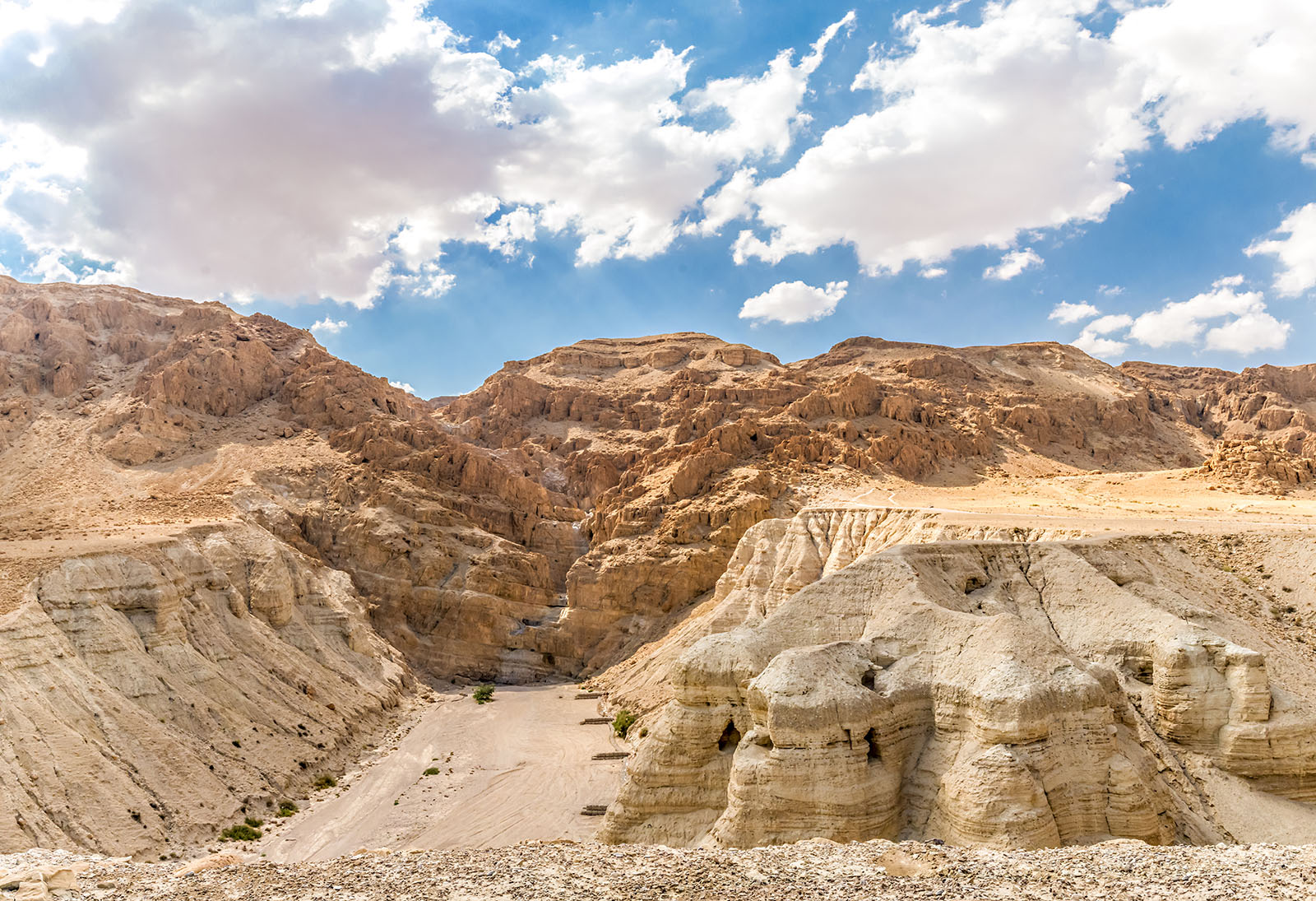
An archaeological treasure in the Judean Desert, the Qumran Caves are where one of the greatest manuscript discoveries in history was made.
A Discovery That Changed Biblical Studies
Nestled along the northwest shore of the Dead Sea, the Qumran Caves are world-famous as the site where the Dead Sea Scrolls were found between 1947 and 1956. These ancient manuscripts, dating back over 2,000 years, include the earliest known copies of biblical texts, along with sectarian writings from the Essenes, a Jewish religious community that once lived nearby. The discovery has transformed our understanding of the Hebrew Bible and Jewish life during the Second Temple period.
Why Qumran Captivates Visitors
-
Historical Significance – Home to the Dead Sea Scrolls, one of archaeology’s most important finds.
-
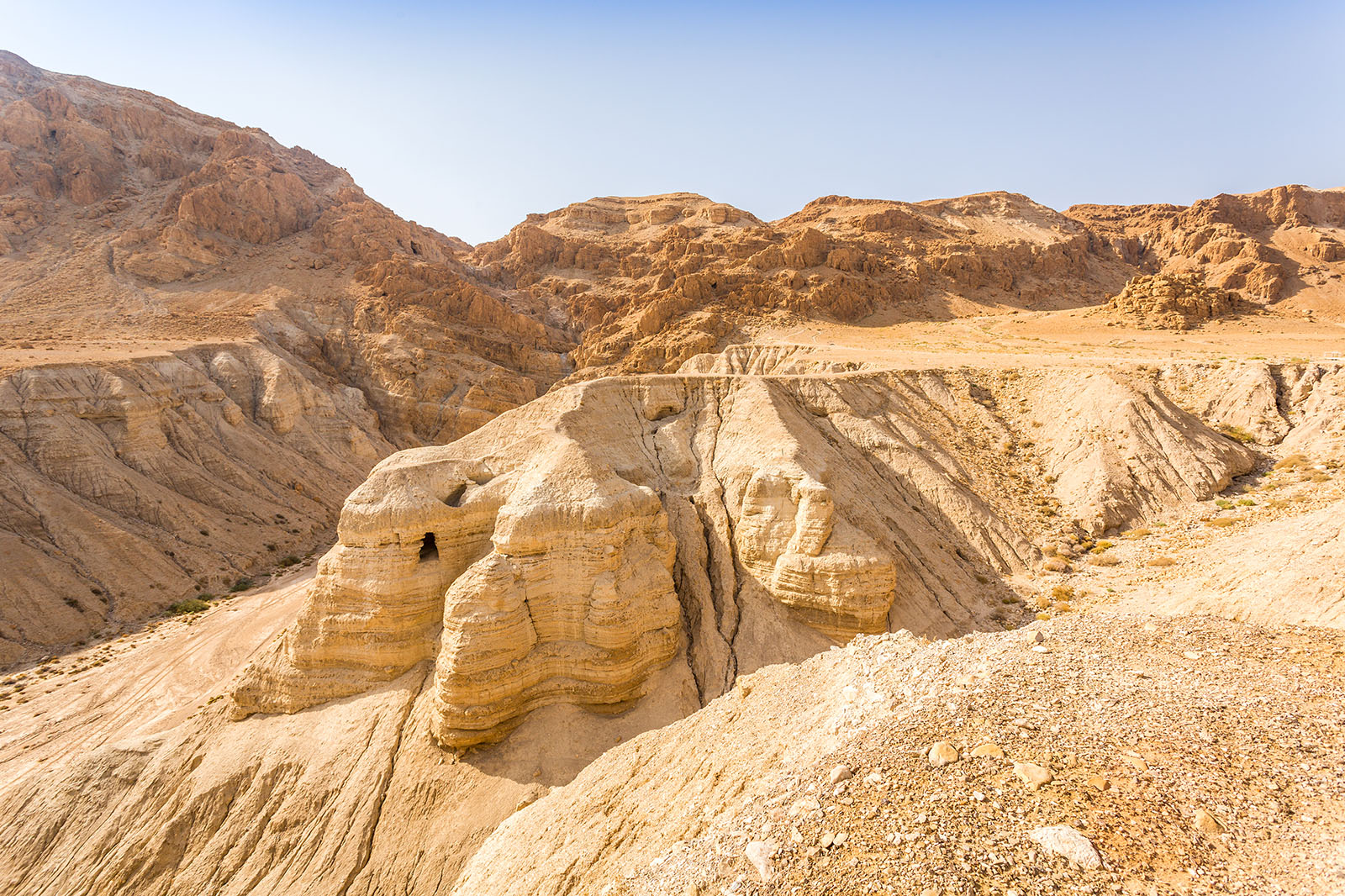
Scenic Desert Setting – Dramatic cliffs overlooking the Dead Sea.
-
Cultural Insight – Learn about the Essenes and their way of life.
-
Proximity to the Dead Sea – Easy to combine with a float in its salty waters.
Traveler Tip: Visit in the cooler morning hours, especially in summer, as the desert heat can be intense.
Top Sights at Qumran
-
Cave 4 – The most famous of the Qumran Caves, visible from the site.
-
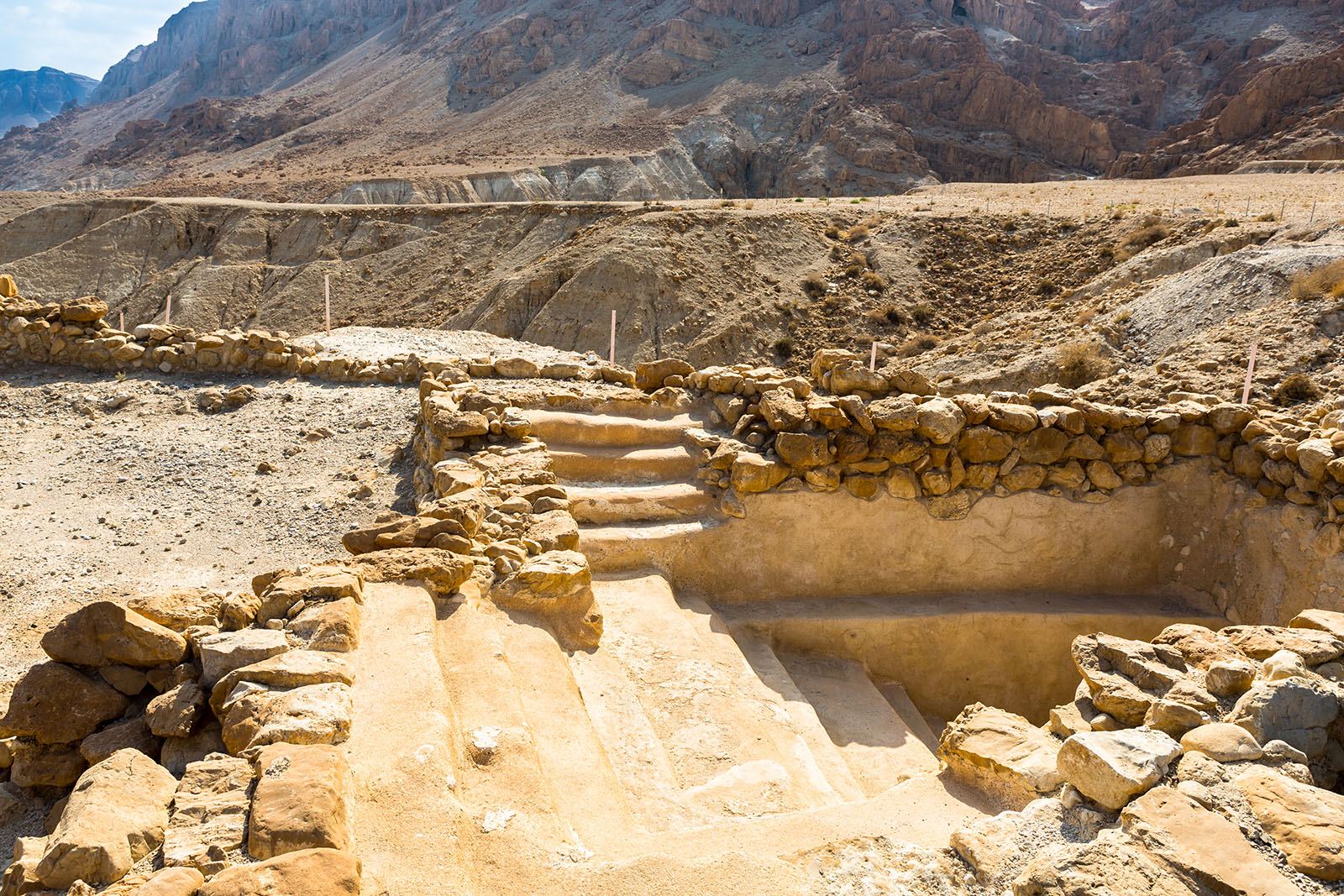
Essene Community Ruins – Remains of living quarters, dining rooms, and ritual baths.
-
Archaeological Park – Walkways and displays explaining the site’s history.
-
Observation Points – Views of the desert, cliffs, and Dead Sea shoreline.
-
Visitor Center – Exhibits, a film presentation, and a café.
Experiences Not to Miss
-
Guided Tours – Gain deeper understanding of the Essenes and the scrolls’ significance.
-
Photography of the Cliffs – The contrast of white rock against the blue Dead Sea is stunning.
-
Hiking Nearby Trails – Short desert walks with sweeping vistas.
-
Museum Visit – See some of the scrolls and related artifacts at the Israel Museum in Jerusalem.
Nearby Attractions
-
Ein Gedi Nature Reserve – Lush desert oasis with waterfalls and wildlife.
-
Masada – Iconic fortress with panoramic views and ancient history.
-
Kalia Beach – One of the Dead Sea’s northern bathing spots.
Practical Travel Tips
Qumran is about a 40-minute drive from Jerusalem and is accessible by car or organized tour. The site is open year-round with an entrance fee. Wear sturdy shoes for walking on uneven terrain and bring water, sunscreen, and a hat. Most visits last one to two hours.
FAQs About Visiting Qumran
1. What are the Qumran Caves famous for?
They are where the Dead Sea Scrolls were discovered, including some of the oldest surviving biblical manuscripts, dating back over two millennia.
2. Who lived at Qumran?
Archaeologists believe the site was inhabited by the Essenes, a Jewish sect that lived a communal, ascetic lifestyle during the Second Temple period.
3. Can visitors enter the caves?
The caves themselves are not accessible for preservation reasons, but Cave 4 and others can be viewed from designated paths and lookout points.
4. How long should I spend at Qumran?
Plan for 1–2 hours to explore the ruins, visitor center, and viewpoints, plus additional time if visiting nearby Dead Sea attractions.
5. When is the best time to visit?
Autumn through spring offers cooler temperatures and more comfortable hiking conditions.